
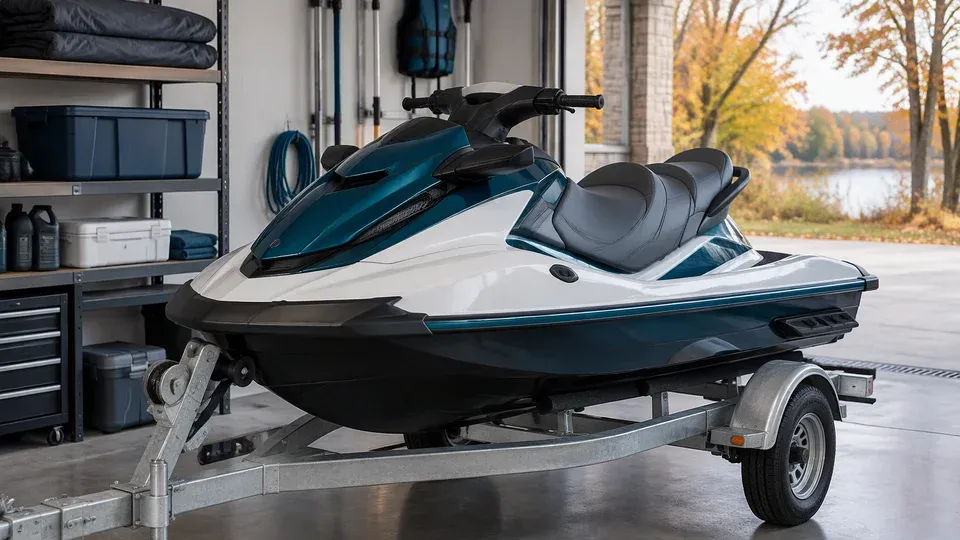
A jet ski can provide countless hours of fun during the warmer months, but putting it away for winter requires more than parking it in a garage and covering it with a tarp. Water, fuel, dirt, moisture, and cold temperatures can all affect a personal watercraft while it sits unused.
Proper winterization can help prevent corrosion, battery failure, fuel-system problems, freezing damage, and other expensive repairs. The exact process varies by brand and model, so always begin by consulting your owner’s manual. Manufacturers such as Sea-Doo include model-specific storage and preseason instructions in their operator guides.
Here are the main steps to consider before moving your jet ski into winter storage.
Gather Your Supplies
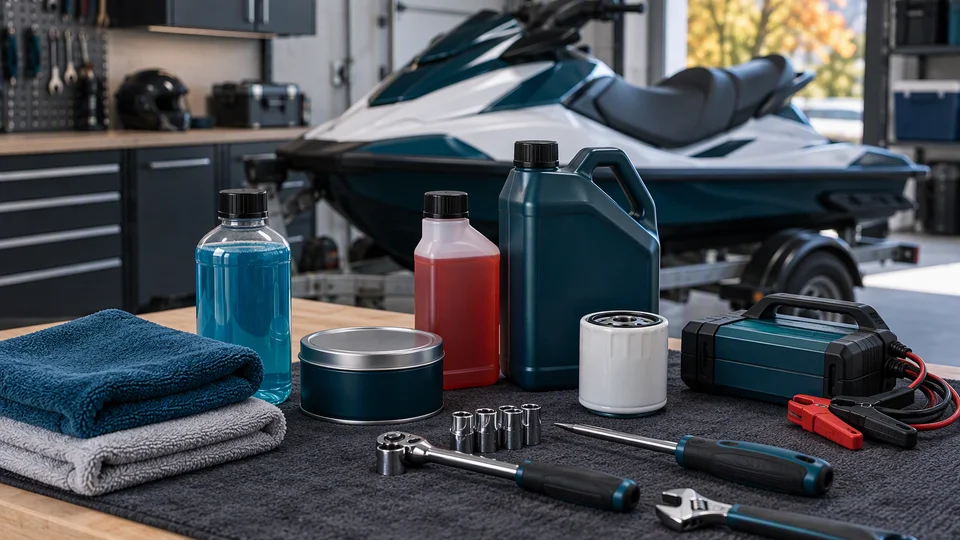
Collecting everything before you begin can make the process easier. Depending on your model and its maintenance requirements, you may need:
• Mild soap and water
• Soft cleaning cloths
• Marine wax
• Fuel stabilizer
• Engine oil and an oil filter
• Fogging oil
• Antifreeze approved for your watercraft
• Battery charger or maintainer
• Protective cover
• Basic hand tools
Do not assume every product or procedure is suitable for every jet ski. Review the manufacturer’s instructions before buying supplies, especially for antifreeze, oil changes, engine flushing, and internal lubrication.
When you are uncomfortable performing mechanical work, have a qualified marine technician winterize the watercraft for you.
Clean and Dry the Exterior
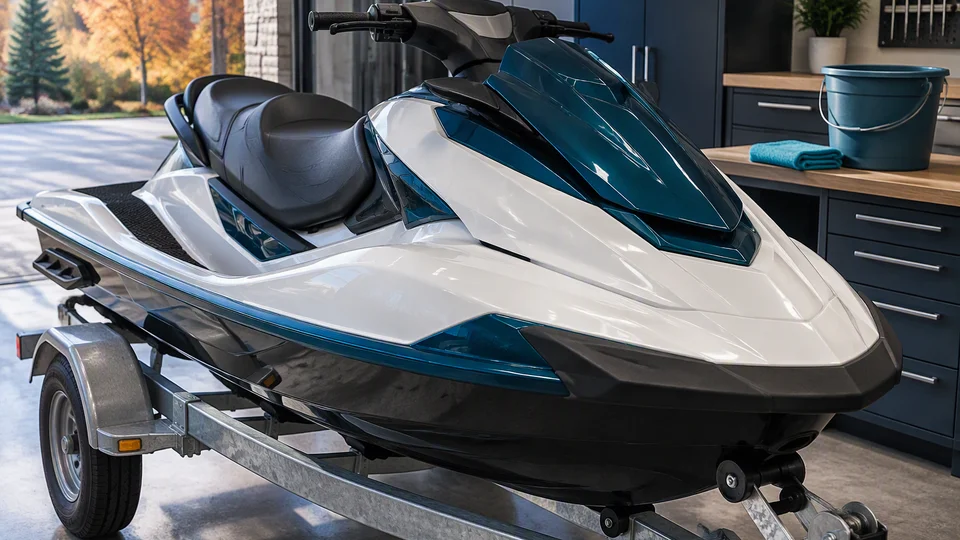
Before storing your jet ski, remove personal belongings from its compartments. Life jackets, tow ropes, sunglasses, food wrappers, towels, and other items can trap moisture, create odours, or attract pests.
Wash the hull, seat, handlebars, footwells, and storage areas to remove mud, algae, salt, insects, and other residue. Pay special attention to any areas that remain wet after use.
Allow the watercraft to dry completely. Leaving compartments slightly open may improve airflow and reduce trapped moisture, provided doing so is appropriate for your model and storage environment.
Once the exterior is clean and dry, consider applying marine wax to the hull. Wax can add a protective barrier and make the watercraft easier to clean when boating season returns.
Remove Remaining Water
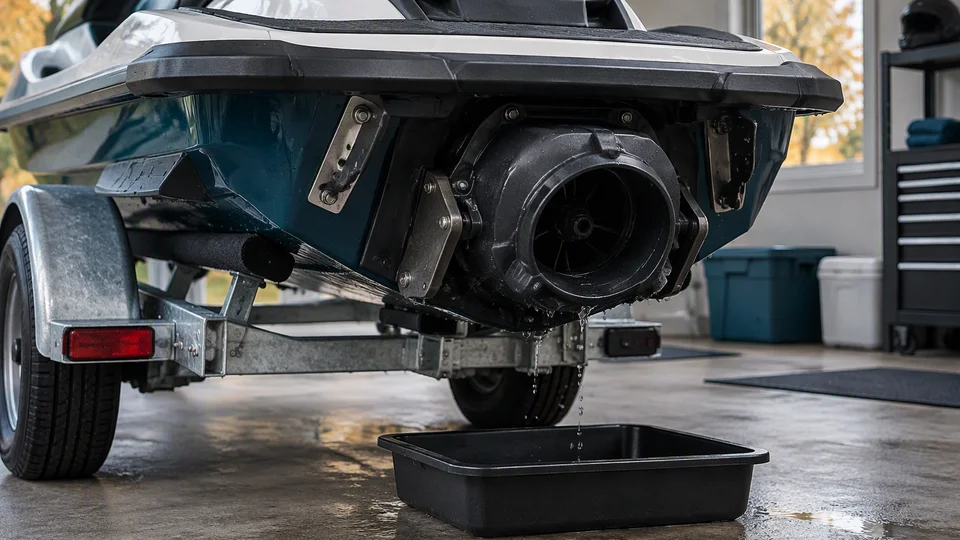
Water left inside a jet ski’s cooling or exhaust system may freeze and expand during cold weather. It can also contribute to corrosion during long-term storage.
The correct draining and flushing procedure depends heavily on the watercraft’s design. Some manufacturers provide specific instructions involving the flush connection, engine position, or short engine-running intervals. Following a generic online sequence without checking the manual could damage the engine or cooling system.
Sea-Doo notes that water, grime, and other residue should be addressed as part of winterization and recommends following the proper storage procedure for the individual watercraft.
Never run a jet ski engine out of the water for longer than the manufacturer allows. If the draining process is unclear, contact an authorized dealer or marine technician.
Protect the Fuel System
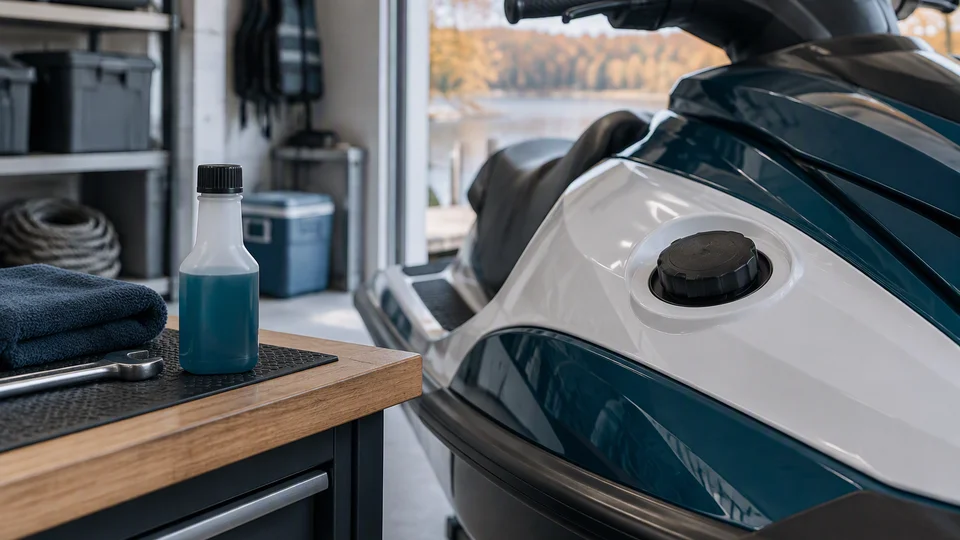
Fuel can degrade while a jet ski sits unused, potentially leaving deposits in the fuel system. Your manufacturer may recommend filling the tank to a certain level and adding an approved fuel stabilizer, or it may specify another storage procedure.
When using stabilizer, follow the product instructions and the watercraft manual carefully. The treated fuel may need to circulate through the system before storage.
Do not drain fuel or work around gasoline near flames, sparks, heaters, cigarettes, or other ignition sources. Fuel-storage rules also vary between self storage facilities. Confirm the facility’s requirements before bringing in a motorized vehicle or watercraft.
Change the Oil When Required
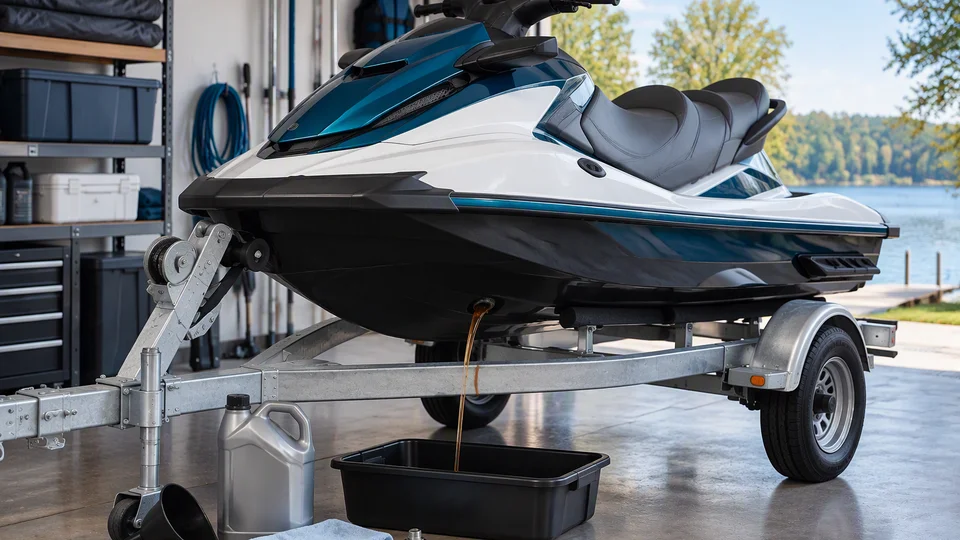
For four-stroke models, winterization may include changing the engine oil and filter. Used oil can contain contaminants from normal operation, so replacing it before long-term storage may help protect internal components.
Oil specifications, capacities, filters, and change procedures differ by model. Use only the type and quantity listed in your owner’s manual.
Some personal watercraft may also require additional lubrication, corrosion protection, or fogging procedures. These steps should never be improvised. Follow the manufacturer’s instructions or leave the work to a trained technician.
Care for the Battery
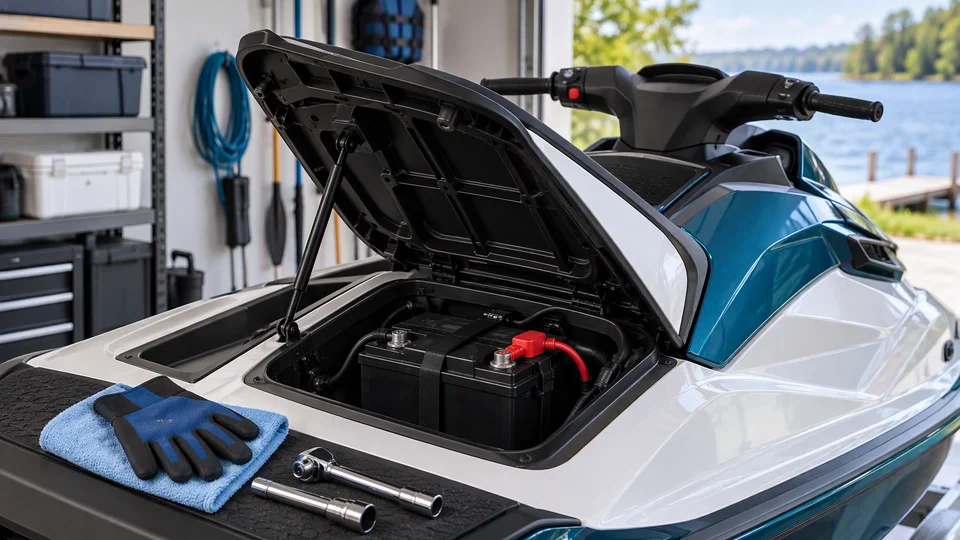
A battery left connected throughout the winter may slowly discharge. Cold conditions can also affect a battery that is already weak or poorly maintained.
Your owner’s manual may recommend disconnecting or removing the battery. If you remove it, store it in a dry, ventilated place away from children, pets, flames, and extreme temperatures. A compatible battery maintainer can help preserve the charge, but it must be used according to the battery manufacturer’s directions.
Inspect the terminals for corrosion and clean them using the recommended method. Do not place a damaged, cracked, or leaking battery into storage.
Inspect the Jet Ski and Trailer
Winterization is a good time to look for wear that may need attention before spring. Inspect the hull, seat, controls, hoses, fittings, drain plugs, and visible engine components.
Check the trailer as well. Look at the tires, wheel bearings, lights, straps, winch, safety chains, and hitch. Confirm that the jet ski sits securely on the bunks and that its weight is properly supported.
Addressing minor problems now can help prevent an unpleasant surprise on your first outing next season.`
Cover and Store It Properly
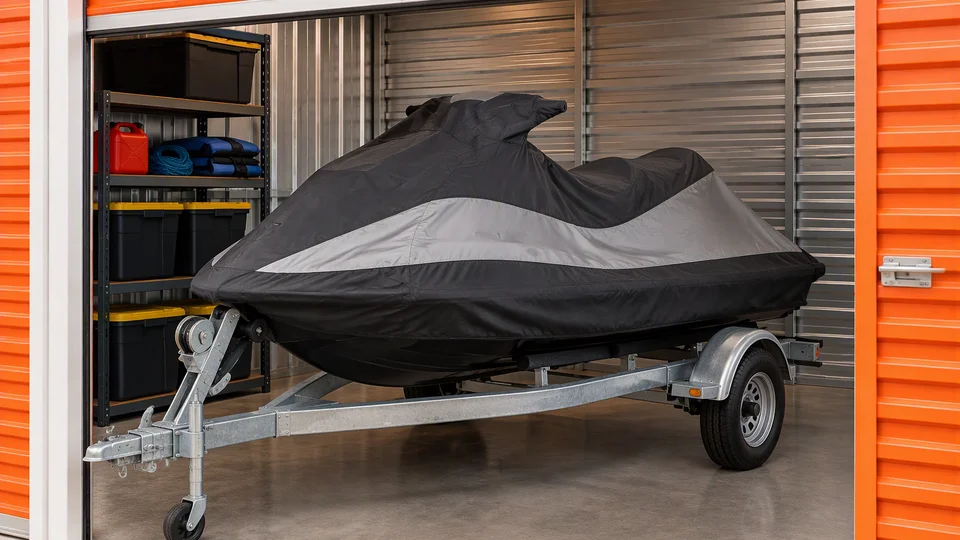
Use a fitted, breathable cover designed for your personal watercraft. A loose plastic tarp may trap condensation or rub against the finish. The cover should protect the jet ski while still allowing appropriate ventilation.
Store the watercraft securely on its trailer or a stand designed to support its hull. Avoid placing it directly on the ground or balancing it on makeshift supports.
Indoor storage generally offers greater protection from snow, ice, sunlight, wind, and changing temperatures. Covered or outdoor storage may also be suitable when the jet ski is thoroughly prepared and protected, depending on the local climate and facility options.
Check the Watercraft During Winter
Do not completely forget about your jet ski once it is stored. When access is available, inspect it occasionally for moisture, pests, cover damage, tire pressure, or other concerns.
Do not start the engine simply to “exercise” it unless the manufacturer specifically recommends doing so and you can follow the correct procedure. Improperly running the engine out of water may cause damage.
Give Your Jet Ski a Winter Vacation

Your jet ski may be done making waves for the season, but that does not mean it needs to spend the winter taking over your garage or driveway. Once it is cleaned, winterized, and ready to rest, we can help give it a convenient place to stay until warmer weather returns.
Select Mini Mall Storage facilities may offer indoor, covered, or outdoor options for personal watercraft and trailers. Availability and requirements vary by location, so check with your nearest facility before reserving.
When lake days are back on the calendar, your jet ski will be ready to come out of hibernation. Find a Mini Mall Storage location near you and ask about space for your watercraft, trailer, and boating gear.


