
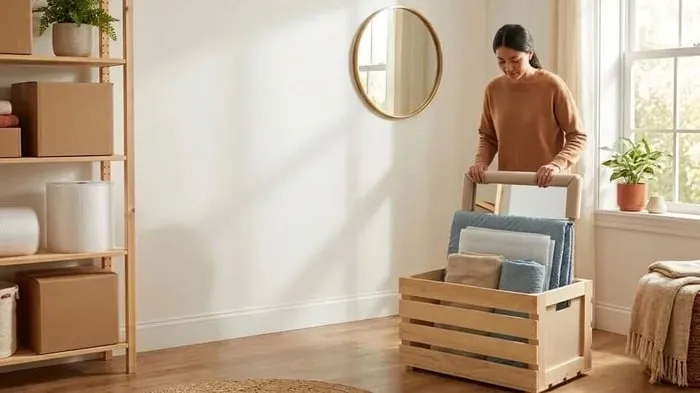

Mirrors are delicate household items that combine beauty with function, but their fragile nature means they require special care when being stored. From decorative wall mirrors and full-length pieces to framed antiques, mirrors add light and style to a space—but without proper handling, they can be easily damaged. Whether you’re moving, renovating, downsizing, or placing mirrors into long-term storage, improper storage can quickly lead to cracks, scratches, chipped edges, or damage to the reflective backing. Unlike many other décor items, mirrors are highly sensitive to pressure, moisture, and sudden temperature changes, making thoughtful storage essential.
Proper mirror storage isn’t just about preventing breakage; it’s about preserving clarity, appearance, and value over time. Even minor mistakes, such as leaning a mirror at the wrong angle or storing it in a damp environment, can cause damage that may not become noticeable until months later.
This guide explains how to store mirrors safely using a straightforward, step-by-step approach. By following these six essential steps, you can reduce the risk of damage, maintain the mirror’s condition, and ensure it’s ready to use the moment it comes out of storage
Step 1: Clean and Prepare the Mirror
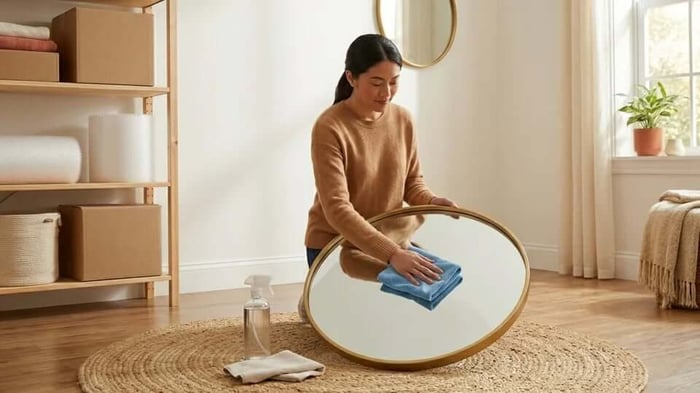
Before storing a mirror, it’s important to clean it properly. Dust, fingerprints, and residue left on the surface can harden over time, making the mirror difficult to restore later. Even more importantly, storing a mirror while damp can lead to damage to the reflective backing.
Use a gentle glass cleaner or a simple mix of vinegar and water to clean the surface. Wipe the mirror with a soft microfiber cloth to avoid scratches, and allow it to dry completely. Take a moment to inspect the mirror for existing cracks or chips so you can handle fragile areas with extra care during wrapping.
Step 2: Protect the Glass Surface Thoroughly
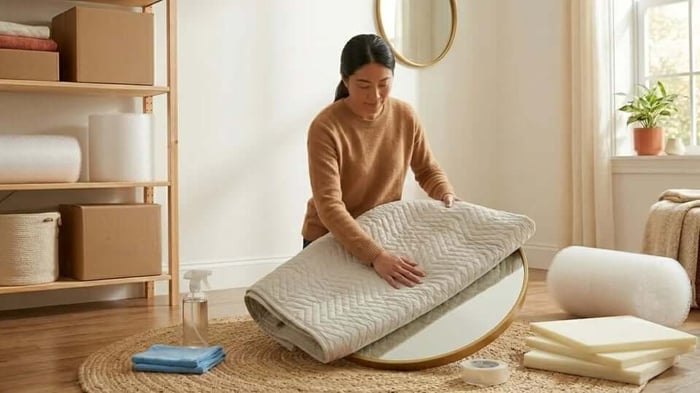
The glass face of a mirror is the most vulnerable part and should be protected first. Place a cushioning layer directly over the glass to guard against scratches and pressure during handling or storage.
Materials such as:
- bubble wrap
- foam sheets
- thick moving blankets work well for this purpose.
The padding should fully cover the surface without gaps. If tape is needed to keep the padding in place, make sure it is applied over the protective material and never directly onto the glass, as adhesive can pull or leave marks when removed.
Step 3: Reinforce Edges, Corners, and Frames
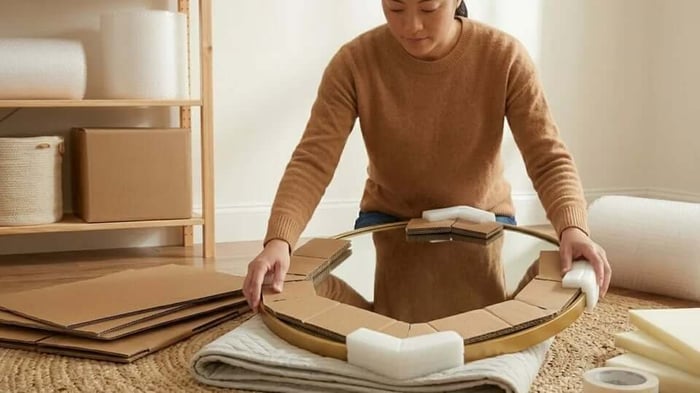
Edges and corners are where mirrors are most likely to crack, especially if they are bumped or shifted during storage. These areas deserve extra reinforcement.
Add additional padding around each corner and along the edges, using folded cardboard or thicker foam if possible. For framed mirrors, make sure the frame itself is secured and padded, as loose or weak frames can transfer stress directly to the glass. Taking the time to strengthen these vulnerable points significantly reduces the chance of breakage.
Step 4: Wrap and Secure the Entire Mirror
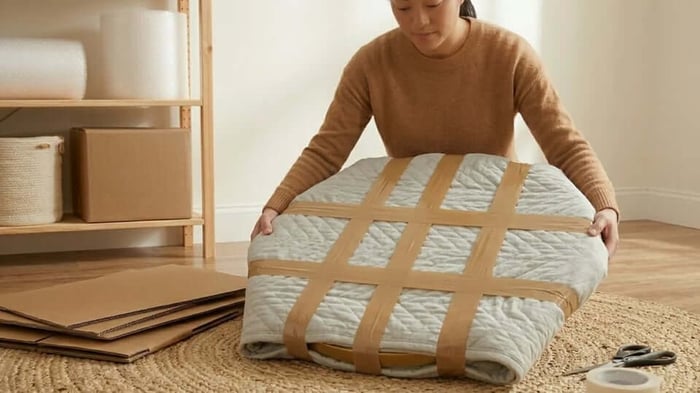
Once the glass, edges, and corners are protected, wrap the entire mirror into a single, secure package. A moving blanket or large cardboard sheet works well to create an outer layer that holds everything together.
The goal is firmness without pressure. The wrap should prevent the mirror from shifting but not be pulled so tight that it bends the frame or glass. Secure the wrapping with packing tape around the exterior padding only. When properly wrapped, the mirror should feel solid and stable when lifted.
Step 5: Store the Mirror Upright in a Safe Position
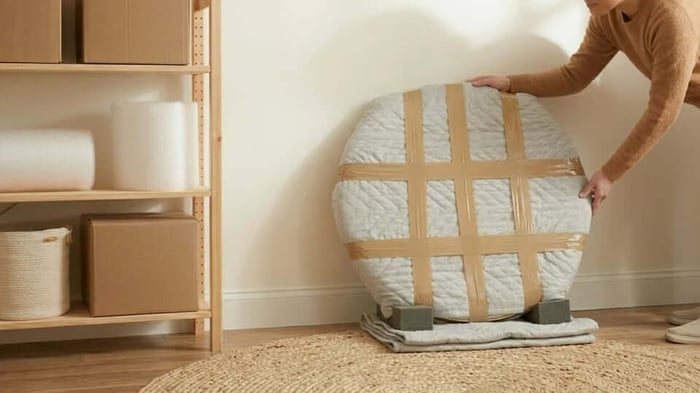
One of the most common and costly mistakes people make is storing mirrors flat. Laying mirrors flat increases pressure across the glass, making them far more likely to crack—sometimes even without external force.
Mirrors should always be stored upright on their edge, ideally against a wall or sturdy support. A slight backward lean is acceptable, but extreme angles should be avoided. Place soft padding or foam blocks at the base to prevent slipping and ensure the mirror cannot tip forward. Proper positioning is essential for both short‑term and long‑term storage.
Step 6: Control Movement and Prevent Pressure
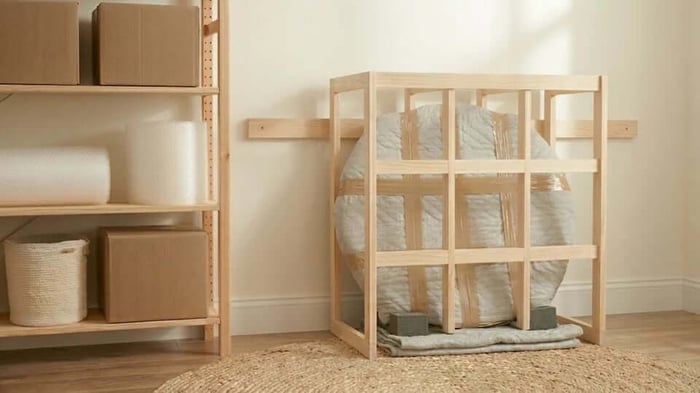
Even a well wrapped mirror can be damaged if it shifts or bears weight during storage. Movement and pressure are silent risks that often go unnoticed until it’s too late, especially in shared storage spaces or during long storage periods.
Position the mirror where it will not be bumped, leaned on, or used as a support for other items. Keep clear space around it so boxes or furniture cannot slide into the glass. If necessary, use barriers such as wooden boards, sturdy dividers, or storage racks to create a protective buffer zone. Stability is key—once the mirror is placed, it should not need to be moved again until removal. Preventing pressure and vibration goes a long way toward ensuring the glass remains intact.
Store Mirrors the Right Way with Mini Mall Storage

At Mini Mall Storage, safe mirror storage goes beyond careful wrapping and upright placement, it also depends on the right environment. Mirrors are especially sensitive to temperature changes and moisture, both of which can weaken glass and damage the reflective backing over time. Without proper conditions, even well‑protected mirrors can develop cracks, corrosion, or dark spots along the edges. That’s why our climate controlled storage units are an ideal solution for keeping mirrors protected during short‑ or long‑term storage.
Climate controlled storage units are designed to maintain stable temperature and humidity levels year‑round, helping reduce the risk of stress fractures, moisture buildup, and warping. This added layer of protection is especially important for framed mirrors, antique pieces, or large wall and full‑length mirrors that are more vulnerable to environmental changes. Whether a mirror is being stored during a move, a renovation, or a seasonal transition, Mini Mall Storage offers a clean, consistent, and secure space built to help preserve its condition.
When it’s time to take a mirror out of storage, condition matters. It should look just as clear and undamaged as it did when it was stored away. At Mini Mall Storage, mirrors aren’t simply placed in storage, they’re protected with the care they deserve, ready to be displayed again without surprises.
Visit us at Mini Mall Storage to find a climate controlled unit designed to keep your mirrors, and your peace of mind safe every step of the way.
FAQs
Should mirrors be stored upright or flat?
Mirrors should always be stored upright on their edge. Storing a mirror flat can place too much pressure on the glass, especially if items are stacked nearby or on top of it. Upright storage helps reduce stress and keeps the mirror better protected
How do you protect a mirror before putting it in storage?
To protect a mirror before storage, cover the glass with bubble wrap, foam sheets, or a moving blanket. Add extra padding around the edges and corners, then wrap the entire mirror securely. Avoid placing tape directly on the glass.
Can mirrors be stored in a storage unit?
Yes, mirrors can be stored in a storage unit when they are packed and positioned properly. A storage unit gives you extra space to keep mirrors upright, protected, and away from busy areas where they may be bumped or damaged.


