


Back-to-school season can feel exciting, stressful, and overwhelming all at once. Between shopping for supplies, adjusting routines, organizing schedules, and preparing your home for a busier season, there is a lot to manage before the first day of school arrives.
A little preparation can make the transition much smoother. By organizing your home, creating simple routines, and giving school supplies a designated place, you can reduce morning stress and help everyone begin the year feeling more prepared.
Whether you are getting young children ready for elementary school, helping teenagers manage busy schedules, or preparing a student for college, this back-to-school organization guide can help you start the year on the right foot.
Start with a Back-to-School Declutter
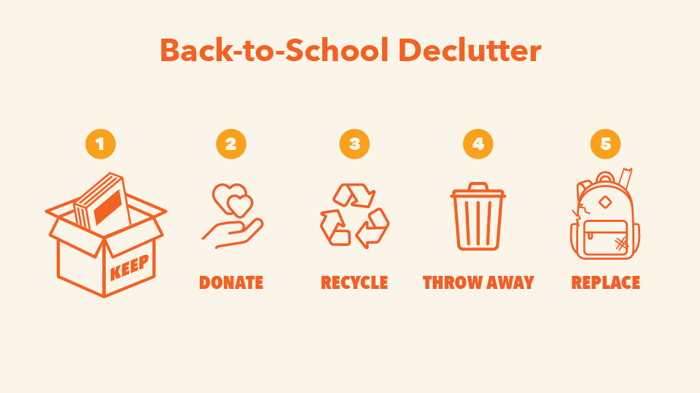 Before buying new supplies, take time to sort through what you already have. School items often accumulate throughout the year, leaving drawers, closets, and desks filled with dried-out markers, old notebooks, broken pencils, and forgotten papers.
Begin by gathering school supplies from around the house. Check backpacks, bedroom desks, kitchen drawers, and storage bins. Separate everything into a few simple categories:
- Keep and reuse
- Donate
- Recycle
- Throw away
- Replace
You may discover that you already have many of the supplies on your shopping list. Reusing folders, pencil cases, binders, and art supplies can save money while preventing unnecessary clutter.
This is also a good time to remove clothing that no longer fits, worn-out shoes, old lunch containers, and unused sports equipment. Clearing out these items creates space for the things your family will actually need during the new school year.
Create a Dedicated Homework Station

A designated homework area can help students stay focused and keep school materials from spreading throughout the home. The space does not need to be large or elaborate. A small desk, a section of the kitchen table, or a quiet corner of a bedroom can work well.
Choose an area with good lighting and as few distractions as possible. Keep frequently used supplies nearby, including pencils, pens, paper, scissors, a calculator, and charging cables.
Use small containers, drawer organizers, or labelled baskets to keep everything easy to find. When students know where their supplies belong, they are less likely to waste time searching for them.
Try to avoid overcrowding the homework station. Too many decorations, papers, or supplies can make the area distracting. Keep only the essentials nearby and store extra supplies elsewhere until they are needed.
Organize School Supplies by Category
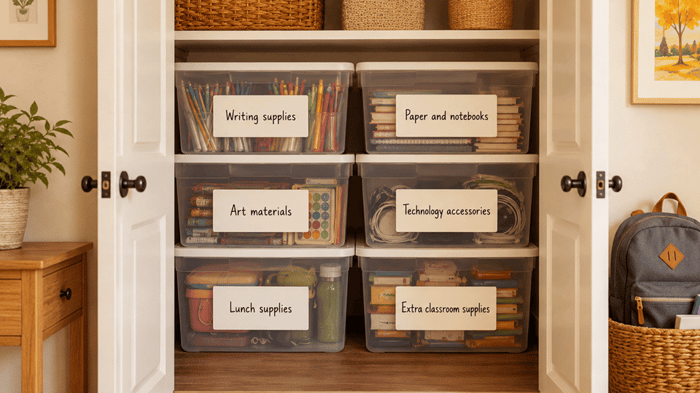
Instead of placing every school supply into one large bin, divide items into clear categories. This makes it easier to find what is needed and helps prevent duplicate purchases.
You might create separate containers for:
- Writing supplies
- Paper and notebooks
- Art materials
- Technology accessories
- Lunch supplies
- Extra classroom supplies
Clear containers are useful because you can see what is inside. Labels are also helpful, especially for younger children who are learning where things belong.
Keep everyday supplies within easy reach and place extras on a higher shelf or in a nearby closet. At the end of each month, check your inventory and restock only what is running low.
Set Up an Entryway Drop Zone
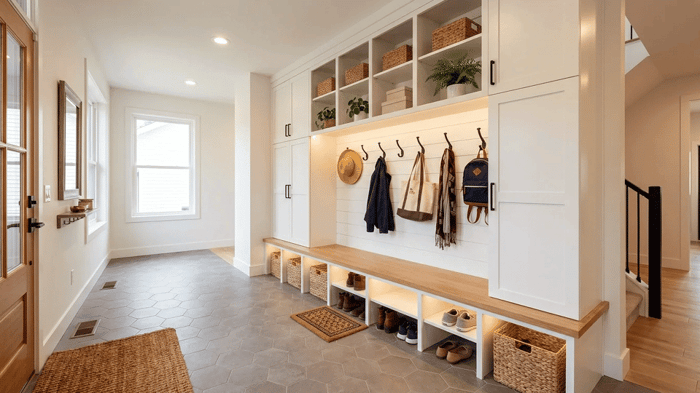
School bags, jackets, shoes, sports equipment, and lunch boxes can quickly create clutter near the front door. A simple drop zone gives each item a designated place and makes busy mornings more manageable.
Use hooks for backpacks and jackets, baskets for hats and gloves, and a shoe rack for footwear. Give each family member their own hook, bin, or section.
Place the drop zone near the entrance your family uses most often. This encourages everyone to put their belongings away as soon as they arrive home.
You can also keep a small tray nearby for permission slips, library books, and papers that need to be signed. This reduces the chance of important documents disappearing into backpacks or being forgotten on the kitchen counter.
Prepare Clothes Ahead of Time
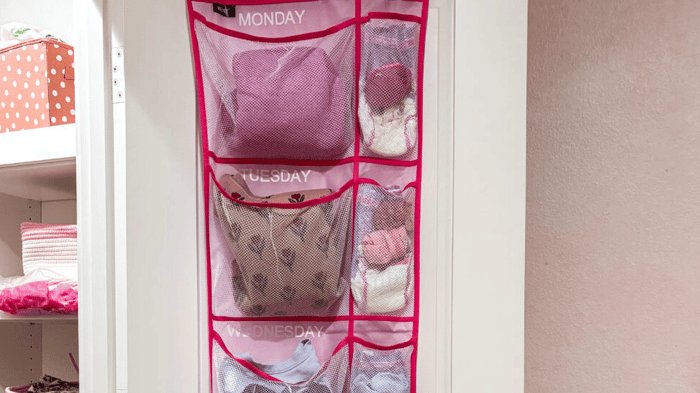
Choosing an outfit in the morning can create unnecessary stress, especially when everyone is trying to leave the house at the same time.
Encourage students to select their clothing the night before. For younger children, consider using a hanging organizer with a section for each weekday. Outfits can be prepared on Sunday and adjusted as needed throughout the week.
Review the weather forecast before choosing clothes and make sure school uniforms, gym clothes, and seasonal outerwear are clean and ready to wear.
Keeping closets organized also makes this process easier. Group similar items together and remove clothing that no longer fits. Store off-season clothing somewhere else so the closet only contains items that are currently useful.
Simplify Lunch and Snack Preparation

Packing lunches every morning can become time-consuming without a system. Create a designated area in the kitchen for lunch boxes, reusable containers, water bottles, and snack bags.
Use one shelf or drawer for lunch supplies so everything is easy to access. You can also create a snack station with pre-portioned options that children can choose from when packing their lunches.
Prepare what you can the night before. Wash fruit, refill water bottles, portion snacks, and place refrigerated items together.
A weekly lunch plan can also save time and reduce last-minute decisions. Write down a few lunch ideas before grocery shopping so you have everything you need for the week.
Use a Family Calendar
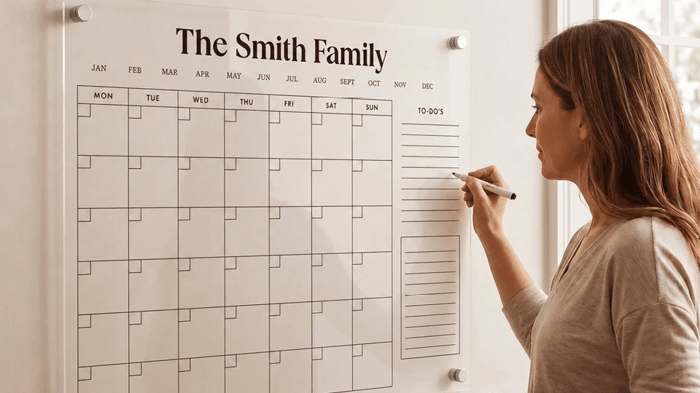
School schedules often include appointments, practices, field trips, meetings, special events, and assignment deadlines. A family calendar helps everyone stay informed and reduces scheduling conflicts.
You can use a wall calendar, whiteboard, shared digital calendar, or a combination of both. Choose a system that everyone in the household can easily access.
Use different colours for each family member and add important dates as soon as they become available. Review the calendar together at the beginning of each week.
For younger children, a visual schedule can make routines easier to understand. Include simple reminders for school days, extracurricular activities, library days, and upcoming events.
Build a Consistent Morning Routine
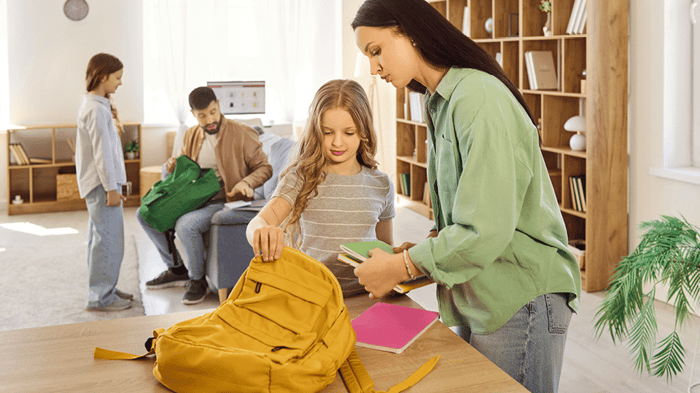
A predictable morning routine can help everyone leave the house on time. Work backward from the time you need to leave and decide how much time is required for each task.
A simple morning routine may include:
- Wake up
- Get dressed
- Eat breakfast
- Brush teeth
- Pack lunch
- Check backpack
- Put on shoes and outerwear
- Leave the house
Complete as many tasks as possible the night before. Backpacks should be packed, homework should be finished, and clothing should be ready.
Consider placing a checklist near the door for items that are often forgotten, such as library books, gym shoes, water bottles, or musical instruments.
Create an After-School Routine

Organization should continue after the school day ends. A consistent after-school routine can help prevent clutter and keep students prepared for the next day.
When students arrive home, encourage them to:
- Hang up their backpack and jacket
- Empty their lunch box
- Place papers in theappropriate tray
- Charge school devices
- Complete homework
- Pack their bag for the next day
Building these habits may take time, but repetition makes the routine easier. Keep the process simple and realistic so students can follow it independently.
Make More Room with Seasonal Storage
Back-to-school season often overlaps with the end of summer, making it an ideal time to reorganize seasonal belongings. Bikes, camping equipment, patio furniture, pool accessories, and summer sports gear may be taking up space needed for school supplies and everyday routines.
A self storage unit can help free up closets, garages, and spare rooms by providing a place for items you do not need every day. You can also store outgrown children’s furniture, extra household items, seasonal decorations, or belongings that need to be kept during a move or renovation.
Before placing items into storage, clean and dry them thoroughly. Use sturdy containers, label every box, and keep frequently needed items near the front of the storage unit.
At Mini Mall Storage, we offer storage unit options for seasonal items, household belongings, sports equipment, moving, decluttering, and more. Find a Mini Mall Storage facility near you and create more room for a smooth, organized school year.


