Table of Contents
How to Pack and Store DVDs and Discs Long-Term
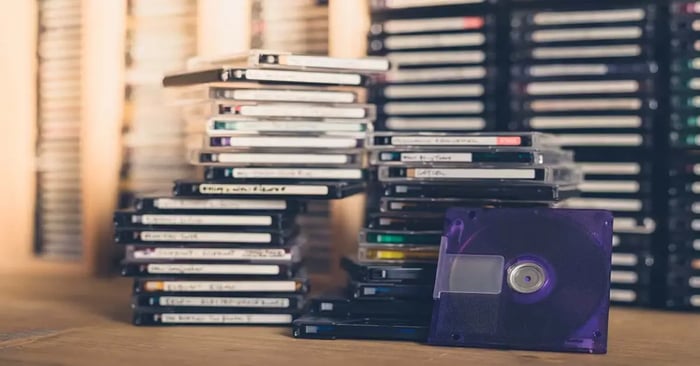
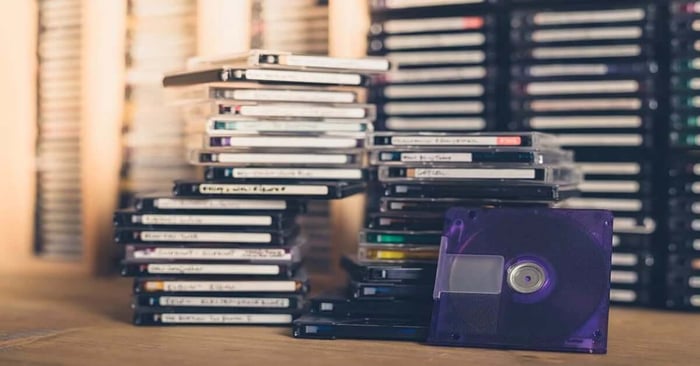
In an age of streaming, live service, and hard drives, holding physical media in your hands does a few things for the mind. Nostalgia. Read the blurb, admire the artwork, and pop in the disc. But imagine getting a ‘disc cannot be read’ error after you’ve built up excitement. For you film, videogame, or music collectors, we’re outlining the must-do tips to pack and store your disc-based media in playable condition.
Whether you’re temporarily packing your videogames for moving, or you’re looking for long-term DVD storage, there’s something here for you. In this article, learn how to pack and store DVDs long-term in storage or at home, from basic care tips to minimalistic storage ideas.
How to Pack and Store DVDs, Videogames, and CDs
Boxes for Moving and Storing DVDs, Videogames, and CDs
When storing and moving your films, games, and music, it’s best to choose a box designed for storing optical media.
Check out these packing boxes for DVDs and Blu-rays, or these CD/DVD storage boxes for keeping your collection organized in storage. You can also find all your typical moving and packing supplies at your local Mini Mall Storage. But if you’re thinking, ‘why should I spend extra on these specialty boxes?’ consider the value of your collection.
Inventory your Movie Collection Before Storing
Are DVDs worth keeping? Like any collectables, some may greatly increase in value over several years. It’s recommended you know what you have and start with an inventory.
Got all the critically acclaimed Criterion Collection releases, like Carol Reed’s The Third Man from 1949? This sells today for $70 or more.
Sometimes rarities are quite subtle. If you’ve got My Neighbor Totoro on DVD, check the version. The Fox Studios English-dubbed version released pre-2005 is often sold upwards of $100 today.
Knowing how much your collection is worth is also recommended for insurance purposes. You could have some valuable, retro video games or an out-of-print foreign film. Start with a spreadsheet and document how much your different discs are worth before storing long-term.
Should DVDs Be Stored Horizontally?
When you’re ready to start packing for moving or storing long-term, it’s completely fine to store your favorite movies horizontally in cardboard boxes, totes, or other storage bins. Storing them horizontally also makes it easier to find specific titles later on.
Consider organizing your collection in a way that makes the most sense for you. You could go alphabetically, by artist or director, chronologically by release year, or even by color if you’re feeling creative. This system works especially well once everything is on the shelf.
Packing Tips:
Fill leftover space in boxes with packing paper, soft clothing, or a couple of t-shirts to keep movies, games, and music from shifting during transport.
Add labels such as “fragile” or “this side up” to remind yourself or movers to handle these items with care.
Place heavier boxes on the bottom when loading for a move.
Keep lighter boxes or items stacked above your fragile media collection to avoid pressure or damage.
If you’re storing your collection long-term in a storage unit, using rack shelving is the best way to stay organized. Shelving keeps DVDs, video games, and CDs off the ground and offers better protection over several years.
How to Clean and Care for Your DVDs, Video games, and CDs
Caring for Your DVDs and CDs
With a few small considerations, you can care for your Xbox games and classic rock CDs to prolong their life and playability.
Optical discs are made with a chemical process. It’s said most optical discs can last for up to 200 years. But when the discs are exposed to extreme heat (like leaving discs exposed to direct sunlight in your car) a chemical reaction can render your disc unreadable.
At home or in storage, it’s best to store your collection in a dark, cool place. And when your discs need cleaning, use a soft cotton cloth wiping from the center outwards to the edge. It’s also safe to use isopropyl alcohol to clean extra dirty DVDs and CDs when you don’t have a specific cleaning solution on hand.
What is Disc Rot?
Disc rot can occur when the metals in the reflective layer of an optical disc – often aluminum – reacts to oxygen or ultra-violet light rendering your media unplayable.
A discoloration of the disc or small visible holes when held up to light are indicators your discs have deteriorated.
Optical discs are made up of several layers. The label, protective layer, reflective layer, dye layer, and base layer make up an optical disc.
CDs are more susceptible to disc rot than DVDs due to a thinner protective layer. Therefore, you want to avoid direct sunlight and heat at all costs. Store CDs in your glovebox, or better yet, remove them from your vehicle.
Cool Ways to Store DVDs, Video games, and CDs
How to Store DVDs like a Minimalist in a Small Space
When you’re looking for how to store DVDs and video games in a small space, there’s a few ways you can approach minimizing your collection.
If you love your collection, this’ll hurt to hear. But it’s worth considering ditching the bulky cases and switching to binders or sleeves to save space. This approach is great for indexing your movies, music, and games.
However, there are a few trending minimalist design choices for storing your disc-based collections with the cases. Do you have an under used closet at home? You can turn any storage space into your movie haven with some floating shelves. Back of the door storage can work here too.
Keeping your movies and games in drawers is another clean, minimal way to store. Or you can go with plastic containers under the bed. Storing your collection spine up makes it easy to always find what you’re looking for.
If this is all way too much based on the size of your collection, look for ways to downsize. Are there a couple hundred movies you can store away? Sort your movies, take inventory, and pack for storing.
DIY DVD Storage Ideas
Instead of buying a new storage cabinet, build your own media storage or look for unique, second-hand pieces to get the storage furniture you need.
Start on classifieds like Facebook Marketplace or Kijiji. People are always giving away furniture or selling at low prices. Especially while it’s hard to find new storage shelving in furniture stores, the classifieds are worth a look. And don’t forget consignment stores — you may find second-hand storage in those, too.
Now, if you want to design your own video game/DVD/CD storage, you can go minimal – learn how to make your own movie storage in this easy-to-follow guide – or use creative ways to display your collection in all it’s glory.
Picture display shelving like these in Ikea can be repurposed to show off your CD artwork.
Should DVDs Be Stored in Self-Storage?
Where to Store DVDs, Video Games, and CDs Long-Term
If you’re moving, downsizing, or creating space for your growing family, finding somewhere to store your DVDs, video games, and CDs long-term is challenging.
It’s best to avoid heat and temperature fluctuations to prolong the life of your optical discs. Your attic, garage, or basement aren’t great places to keep your treasured collection.
We’ve already covered a variety of ways to store creatively at home. But if you do indeed need the space, self storage is a great option for storing your treasured items safely and securely.
Why Climate-Controlled Storage is a Must for DVDs, Video Games, and CDs
When choosing self-storage to store your DVDs, video games, and CDs, a regular storage unit may pose the same risk as your attic or garage. It’s recommended you opt for a climate-controlled environment to ensure your collection is protected over several months through weather changes.
National Library of Canada says you should store your discs between 15°C and 20°C (59°F and 68°F). A climate-controlled unit with Mini Mall Storage will protect your classic rock CDs, John Wayne DVDs, and old PlayStation video games with a consistent temperature year-round.
Learn more about climate-controlled storage.
Storing Vinyl Records in Climate-Controlled Storage
Just like your disc-based collections, vinyl records are also best protected in a temperature-controlled environment.
Vinyl records are best stored at humidity levels of 45 to 50 percent. But they should also be packed properly for storing long-term. Read our six steps for storing and packing your vinyl collection to learn how to protect your treasured investment in your music collection.
Finding space to store your collections at home is difficult. But with a few ideas you can start building your very own minimalist DVD storage. Otherwise, opt for climate-controlled self-storage to free up space at home.
You’ll never have to worry about damaging your prized collection when stored at a consistent temperature. And finally, when you get back around to it, everything will be in working condition for you, your family, and your friends to enjoy for years to come. Find storage options near you today!
FAQs
How do I prevent disc “rot” during storage?
Keep discs away from moisture, UV exposure, and temperature fluctuations. Storing discs vertically in well-sealed plastic bins with desiccant packs greatly reduces the risk of rot.
If I use a self-storage unit, what features should I look for to store DVDs safely?
For long-term media storage in a self-storage unit, look for climate-controlled units (to manage temperature/humidity), secure facility (to protect from theft or damage), units elevated off the floor, good access, and units away from exterior walls/windows to reduce light/temperature fluctuations
How do I protect my disc collection from moisture and humidity?
Use desiccant (silica gel) packets inside storage containers, ensure the storage environment is well-ventilated and stable, avoid storing in damp basements or attics, and consider climate-controlled storage if you have a large or valuable collection.